How to Sell Jewelry on Etsy: Breaking Into the Number-One Category as a Beginner
By The MyShop Team · 2026-07-30 · 12 min read
Jewelry is the single best-selling category on Etsy, and the moment most new sellers hear that, they cross it off their list. Too crowded, they figure.
Here is the part they miss: a category only gets that big because the demand underneath it is enormous, deep enough that a beginner who picks a specific lane and personalizes it can absolutely carve out room. The trick is not to open "a jewelry shop." It is to become the obvious choice for one kind of buyer. Do that, and the size of the category stops being a threat and starts being the reason there is room for you. This guide walks through how to choose your lane, source your pieces, price them so they are worth your time, and use personalization to escape competing on price.
Key takeaway: Jewelry sells more than any other category on Etsy (as of 2026), so the winning move as a beginner is to niche into one sub-lane, choose a sourcing model you can actually deliver, and use personalization to escape competing on price. Specific and custom beats broad and cheap every time.
Is the jewelry category too saturated for a beginner?
No, but "a jewelry shop" is. The category is competitive precisely because demand is so high, and that same demand is what leaves room for sellers who go narrow. A shop known for one clear thing, personalized birthstone necklaces for new moms, say, is far easier to find and choose than a shop selling a little of everything. Saturation is a problem at the top level and an opportunity once you niche down.
Think about how a shopper actually searches. Almost nobody types "jewelry." They type "personalized coordinate necklace," "custom initial ring," or "birthstone bracelet for grandma." Every one of those is a narrow, high-intent search, and a focused shop is far more likely to rank for it than a general store spreading itself thin across a hundred styles. Your niche is not a limitation. It is how you get found at all.
So your first decision is not what to make. It is who you are for.
Which jewelry sub-lane should you pick?
Choose one sub-lane with proven pull and build your whole shop around it. Some of the strongest, buyer-friendly lanes going into 2026:
- Personalized necklaces: name, initial, and coordinate pieces are perennial gift-searches with clear buyer intent.
- Custom bracelets: beaded, cuff, and engraved styles, easy to personalize and to sell as sets.
- Birthstone and initial pieces: gift-driven and repeatable, since one design serves twelve birthstones and every letter.
- Watch bands and accessories: a fast-growing lane with strong repeat potential as buyers swap styles.
- Everyday minimalist pieces: dainty, stackable rings and chains that buyers return for in different metals and sizes.
Notice the theme: every one of these lends itself to personalization, which is your real edge as a newcomer. Pick the one that fits both your taste and a clear buyer, and resist the urge to dabble in all five at once. A focused shop reads as an expert; a scattered one reads as a bin.
Which metals and materials should you start with?
Choose materials that balance cost, durability, and the look your buyer wants, then state clearly which you use in every listing. The common starting choices:
- Gold-filled: a thick layer of real gold bonded over brass. It lasts far longer than plating and reads as premium without solid-gold prices, which makes it a popular sweet spot.
- Sterling silver: a classic, well-understood material that buyers trust and search for by name. Slightly higher cost, but strong perceived value.
- Stainless steel: durable, affordable, tarnish-resistant, and often well tolerated by sensitive skin, which makes it great for everyday pieces.
- Gold-plated and brass: the lowest cost and fine for trend pieces, though the plating wears over time, so set expectations honestly.
Skin sensitivity matters to a lot of buyers, so if your pieces are nickel-free or hypoallergenic, say so plainly, since it is a real search term and a real selling point. Naming your exact material is not just honest, it is marketing: "14k gold-filled, tarnish-resistant" answers a question and builds trust in the same breath.
How should you source your jewelry?
Match your sourcing model to the time, budget, and skill you actually have, because each trades cost against control. The three common paths:
| Model | Upfront cost | Best for |
|---|---|---|
| Handmade from raw materials | Low to medium | Makers who want full control and the highest margin |
| Assembled from components | Low | Beginners wanting a custom look without metalworking |
| Print on demand or made-to-order partner | Very low | Testing designs with no inventory risk |
Assembling from components (chains, charms, findings, letter tags) is the most common beginner entry because it gives you a personalized, professional-looking product without a full metalworking setup. If you want to test demand before spending on stock, a print-on-demand or made-to-order partner lets you list designs with no inventory at all. Our print-on-demand guide, linked below, walks through that model.
Pro tip: Whichever model you choose, be honest in the listing about how each piece is made. Etsy has rules about describing handmade, designed-by-you, and sourced items accurately, and clear wording also builds buyer trust. "Designed by me, assembled with a gold-filled chain and a hand-stamped charm" tells the truth and still sounds premium.
"A plain bar necklace competes on price. Add a name to it and it competes on meaning."
How does personalization help you compete?
Personalization is how you stop competing on price. A plain silver bar necklace sits in a sea of near-identical listings sorted by who is cheapest. Add a name, a date, a set of coordinates, or a birthstone, and it becomes a one-of-a-kind gift where price is no longer the deciding factor. Buyers happily pay more for something made for them, and that premium is often the difference between a thin margin and a healthy one.
Personalization also protects you from being copied. Anyone can list the same blank chain you do, but they cannot list the specific piece a customer designed with their kids' names on it. That custom layer is your moat, and it is why personalized shops tend to hold their prices while generic ones race to the bottom.
You can layer this further with add-ons. Charm culture is a rising 2026 trend, and interchangeable charms, initial tags, and birthstone drops make natural impulse upsells that lift your average order value. Our pieces on the personalization premium and the add-on play, both linked below, go deeper on pricing and order value.
How do you handle custom orders without drowning in messages?
Set the personalization up inside the listing so buyers configure it themselves, rather than trading a dozen messages per order. Etsy's variations and personalization fields let a shopper pick the metal, choose the chain length, and type the name or date at checkout, which keeps your inbox clear and your process repeatable. A few habits that keep custom work sane:
- Use variations for the choices: metal, size, and chain length as dropdowns so the price and options are clear up front.
- Use the personalization box for the text: the name, date, or coordinates, with a note on character limits and formatting.
- Spell out proofs and turnaround: say whether you send a proof, and state your make time so gift buyers know it will arrive on time.
- Build a template reply: for the questions that still come, a saved response saves you from writing the same thing all day.
The goal is to make buying a custom piece feel as easy as buying an off-the-shelf one. The smoother that is, the more orders you can handle without burning out.
How do you title and tag jewelry listings so buyers find them?
Write titles the way buyers actually search, front-loading the specific phrase a shopper would type rather than a vague word like "necklace." Because jewelry searches are so intent-driven, the exact phrasing of your title and tags is often what decides whether you appear at all. A few rules:
- Lead with the specific item: "Personalized Coordinate Necklace" beats "Handmade Necklace" because it matches a real search.
- Layer in material and style: "Gold-Filled Dainty Initial Necklace" stacks the terms buyers combine.
- Name the occasion and recipient in tags: "gift for mom," "bridesmaid gift," and "push present" are how gift buyers search.
- Use all your tags: spread them across item type, material, style, occasion, and recipient so you appear in more searches.
Think about the buyer's whole phrase. Someone shopping for a new mom might type "personalized birthstone necklace for mom," which touches the item, the personalization, the material, and the recipient all at once. The listing that has those words in its title and tags is the one that shows up. Match the shopper's language, not your internal product names, and you turn a crowded category into a series of narrow searches you can actually win.
How do you price jewelry so it is worth your time?
Price from materials plus fees plus a fair rate for your labor, then let personalization justify the premium. The chart below shows where the money goes on a personalized initial necklace assembled from components.
Here is the same breakdown as a table:
| Line | Amount |
|---|---|
| Components (chain, pendant, letter charm) | $5.00 |
| Packaging (gift box, mailer) | $1.50 |
| Etsy fees (listing, transaction, payment) | $3.00 |
| Your list price | $28.00 |
| Rough profit before your labor | $18.50 |
Those figures are just an example, so use your own costs. The reason a personalized piece can carry that $28 price is the customization itself: a shopper is not comparing it to the cheapest blank chain, they are buying the only necklace with their child's name on it. If you are not sure what is left after Etsy's cut on a personalized piece, ask Spryte to run the numbers on a listing so your price reflects your real margin, not a guess.
How do you photograph and ship small, valuable pieces?
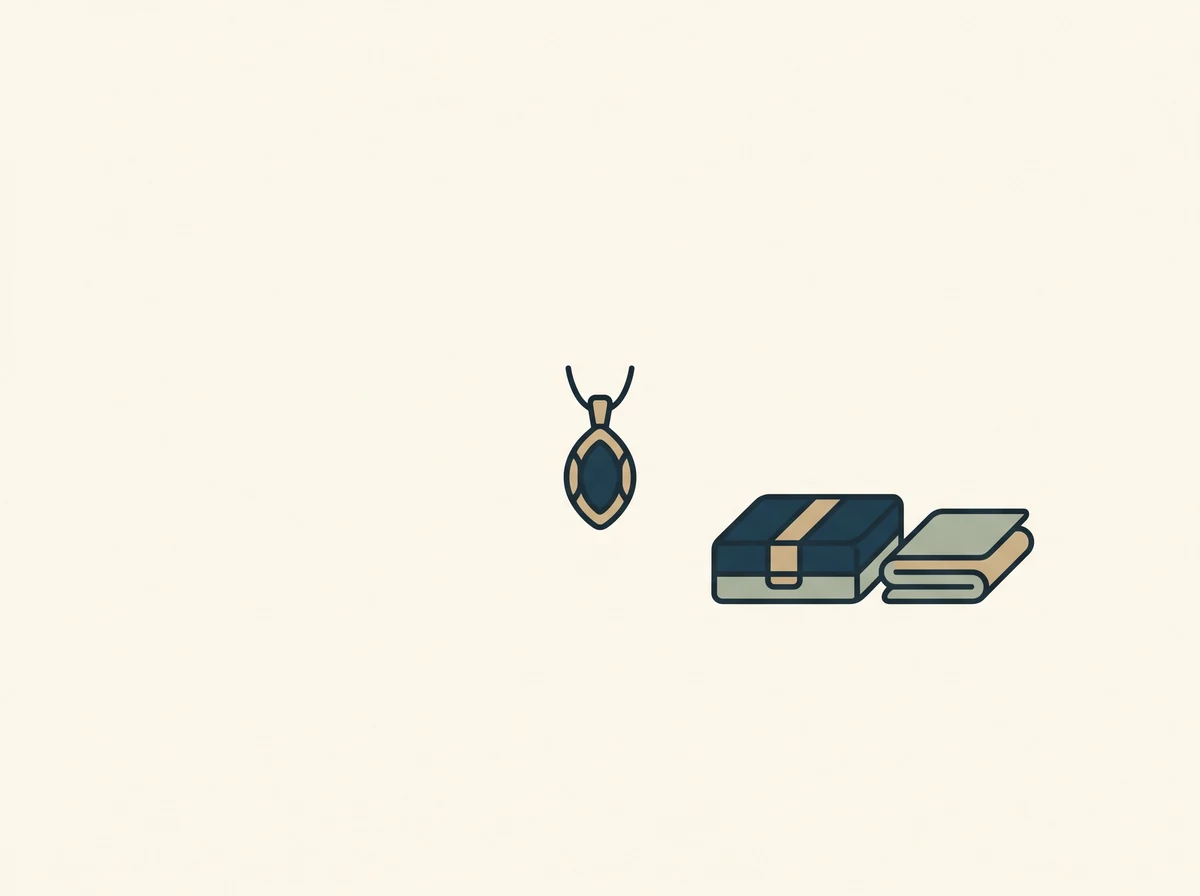
Photograph jewelry both on a clean background and on a body, because buyers need to see the detail and the scale. A close-up shows the craftsmanship, while a shot on a wrist, neck, or hand tells them how big it actually is, which is the number one thing photos of tiny items fail to convey. Add a shot of the piece in its gift packaging, since so much jewelry is bought as a present.
For shipping, protect the piece and make it feel like a gift:
- Use proper packaging: a small box or pouch that protects the piece and doubles as gift-ready presentation.
- Consider tracking for higher-value orders: small items go missing, and tracking protects both you and the buyer.
- Keep it light: jewelry ships cheaply, which is a real margin advantage over bulky products.
Good photos and gift-ready packaging do double duty: they win the sale and they earn the five-star review that helps you rank.
How do you earn your first jewelry sales and reviews?
Your first few sales are the hardest, because a brand-new listing has no reviews and no ranking history to lean on, so give buyers small reasons to trust you and to choose you. A handful of moves that get the flywheel turning:
- Complete your shop fully: an About section, a profile photo, policies, and a cohesive set of listings all signal a real, trustworthy maker rather than a fly-by-night store.
- Price your first pieces to move: a slightly gentler price early on can win those first orders, and once you have reviews you can raise it. The goal at the start is momentum, not maximum margin.
- Ask happy buyers for a review: a short, warm thank-you note in the package invites the review that helps the next shopper trust you.
- Lean on your own network first: friends, family, and social followers can seed your earliest genuine sales and reviews.
- Refresh underperformers: if a listing gets views but no sales, revisit the photos and title before assuming the product is wrong.
Momentum compounds in this category. Each sale brings a review, each review lifts your ranking, and better ranking brings the next sale with less effort. The first ten orders take real work; the next hundred come far more easily once your best listings have proof behind them. Treat the early days as an investment in that proof rather than a verdict on whether the shop can work.
What mistakes should new jewelry sellers avoid?
Most beginner stumbles in this category are avoidable:
- Selling a bit of everything: a scattered shop ranks for nothing. Niche down and become the expert in one lane.
- Competing on price: without personalization you are just the cheapest blank chain, a race you cannot win against volume sellers.
- No scale shots: a gorgeous close-up with no on-body photo leaves buyers guessing at size, and guessing kills carts.
- Vague made-how descriptions: be clear and accurate about handmade versus assembled versus made-to-order.
- Underpricing custom work: personalization is worth a premium, so charge for it instead of giving it away.
Frequently asked questions
Is jewelry a good thing to sell on Etsy for beginners?
Yes, jewelry is Etsy's top-selling category as of 2026, and the high demand leaves room for beginners who niche into one specific lane rather than selling a bit of everything. Personalizing your pieces makes them easier to find and lets you compete on uniqueness instead of price.
What kind of jewelry sells best on Etsy?
Personalized pieces sell especially well, including name and initial necklaces, custom and beaded bracelets, and birthstone jewelry, because they are gift-driven and buyers search for them with clear intent. Watch bands and dainty minimalist pieces are also strong lanes with repeat potential.
Do I need to make jewelry by hand to sell it on Etsy?
No. Many sellers assemble jewelry from components like chains, charms, and findings, which gives a custom look without metalworking skills, and some use made-to-order or print-on-demand partners to test designs with no inventory. Just follow Etsy's rules on describing how each item is made.
How much does it cost to start a jewelry shop on Etsy?
You can start small by assembling from components, so your first costs are a supply of chains, findings, and charms plus packaging and Etsy's listing fees. Testing with a made-to-order partner lowers the upfront cost further, since you buy materials only after a sale.
How do I stand out in such a competitive category?
Pick one narrow sub-lane and become the obvious choice for that buyer, then use personalization so your pieces are not interchangeable with cheaper listings. Adding charms or birthstone options creates impulse upsells that raise your average order value.
Related reading
To price custom work and lift order value, see The Personalization Premium: Charge More by Customizing and The Add-On Play: Charms, Tags and Interchangeable Pieces.