The Soft Stitch Era: Etsy's 2026 Textile Trend and How to Sell Into It
By The myShop Team · 2026-08-15 · 13 min read
Etsy's own trend data has a number in it that is hard to look away from. Searches for embroidered wicker bags rose about 20,000%. Handmade dresses, up 294%. Crochet clothing, up 36%. Not a niche twitching. A category moving.
The label Etsy has put on it is the soft stitch era, and the reading behind it is straightforward. As machine-made sameness gets cheaper and more abundant, a visible human hand becomes the thing worth paying for. Buyers want to see the stitch. They want the slight irregularity that proves a person did it.
Key takeaway: Buyers are paying a premium for visible handwork right now, and the opportunity is not limited to people who crochet. Any shop can lean into texture, imperfection and process, and the shops that photograph the making rather than only the object are the ones capturing it.
What the soft stitch trend actually is
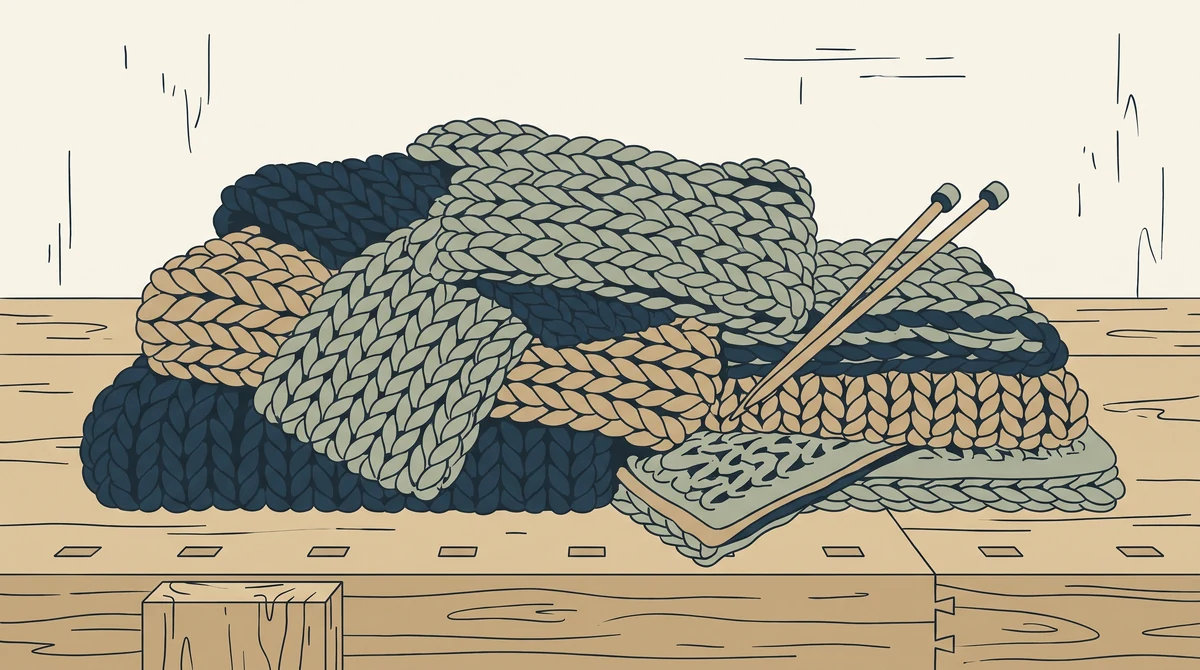
It is a swing toward textiles where the technique is visible: crochet, embroidery, visible mending, hand weaving, quilting, macrame, punch needle. Etsy's 2026 trend reporting groups these under a broader move toward "woven softness" and artisanal textiles, alongside sun-worn fabrics and details that read as deliberate rather than manufactured.
Figures from Etsy trend reporting, 2026. Percentage growth on a small base can look dramatic; treat these as direction, not volume.
That caveat matters, so here it is again plainly. A 20,000% rise means the starting number was tiny. It does not mean embroidered wicker bags are now a bigger category than jewelry. What it does tell you is where attention is moving, and attention tends to arrive before volume.
The demographic underneath it is younger buyers pushing back against fast fashion, either by learning the craft themselves or by buying from someone who already has. Both halves of that are opportunities, and they want different products.
Who is buying, and what they want
There are three distinct buyers inside this trend and they are easy to confuse, which is why some sellers list the wrong thing.
- The wearer. Wants a finished piece, cares about fit and drape, and is comparing you to small independent brands rather than to a craft market. Highest price point, longest consideration, most photos needed.
- The maker. Wants patterns, yarn, kits, and tools. Lower price per order but far more frequent, and the most likely to become a repeat customer.
- The decorator. Wants texture in a room: a wall hanging, a throw, cushion covers, a woven basket. Buys seasonally and in sets, and is the easiest to sell to with good styling photography.
"The maker buys from you twelve times a year. The wearer buys once and tells four people. You want both, and they need different listings."
Most shops try to serve all three from one listing set and end up serving none of them well. Pick the one you can supply reliably, build ten to fifteen listings for that buyer, and only then expand.
If you are unsure which one you are, look at how long your best piece takes to make. Under two hours and you can serve the wearer or the decorator at volume. Over ten and you are either selling to the wearer at a real price or you are selling the pattern to the maker instead, which turns those ten hours into an asset you sell repeatedly rather than a cost you absorb once.
What to make if you already work in fiber
Lean toward products that are quick to complete and easy to size, because handwork is the constraint and sizing is where returns come from. The trend rewards visible technique, not complexity.
| Product | Rough price band | Why it fits the trend |
|---|---|---|
| Crochet market bag or tote | $35 to $75 | One size fits everyone, texture is the whole point |
| Embroidered collar or patch set | $18 to $45 | Fast to make, adds handwork to clothes people own |
| Punch needle wall piece | $45 to $120 | Texture reads instantly in a photo |
| Hand-quilted cushion cover | $40 to $90 | Sold in pairs, decorator buyer, no sizing risk |
| Visible-mending kit | $22 to $38 | Sells the skill, not the object, to the maker buyer |
| Crochet garment | $90 to $250 | Highest value, highest effort, size carefully |
Indicative Etsy price bands as of 2026. Yarn quality and hours invested move these substantially.
Garments are where the money is and also where new sellers get hurt. A crochet cardigan can be forty hours of work, and if the fit is wrong you have absorbed all of it. If you want to sell garments, start with one shape that is forgiving, an oversized cardigan or a bralette rather than a fitted dress, and offer it in two or three sizes with real measurements in the listing rather than S, M, L.
How to sell into this trend if you do not crochet
Borrow the aesthetic rather than the technique. The trend is really about visible human process, and every craft has a version of that. You do not need to learn a new skill to benefit from a shift in what buyers find appealing.
- Add a textile element to what you already make. A woven cord instead of a chain. A fabric wrap on a candle. A stitched fabric label on a leather piece. Small, and it changes the whole read of the photo.
- Change the packaging. Kraft paper, cotton twine, a fabric drawstring bag instead of a poly mailer. Buyers photograph the unboxing, and this is the cheapest possible way into the aesthetic.
- Shoot on textured surfaces. Linen, raw wood, a nubby blanket. Stop shooting on white. This one change moves a listing from "product" to "handmade" without touching the product.
- Show your hands. A photo mid-process, tools visible, imperfect. It is the single most on-trend image you can add to any listing in 2026.
- Use the language. "Hand-stitched," "small batch," "made one at a time," "no two are identical." These are search phrases now, not just marketing copy.
- Sell the kit version. If your product could be taught, a kit reaches the maker buyer, who is the fastest-growing half of this trend.
Watch out: Do not describe machine-made or mass-produced items as hand-stitched or handmade. Etsy requires accurate representation of how items are made, and buyers in this specific category are unusually good at spotting the difference in photos. A one-star review for "this is not handmade" is very hard to recover from.

Photographing texture, which is the whole job
Light textiles from the side, never straight on. Front lighting flattens the surface and a flattened photo of a crochet bag looks like a printed graphic of a crochet bag. Side light throws small shadows into every stitch, and those shadows are what buyers are actually shopping for.
The rest of the gallery follows from there. A macro shot close enough that individual stitches fill the frame, which is the image that proves the piece is handmade. A scale shot with a hand or a body. A drape shot, because fiber pieces behave differently hanging than lying flat, and buyers want to know. A styled shot in a room or outfit. And a process shot with the work half-finished on the hook or hoop.
More than 70% of Etsy purchases happen on a phone (as of 2026), so check the macro shot at thumbnail size. If the texture is not visible small, it is not doing its job in search results.
Words buyers are using
Write your titles around the technique and the material, because that is how this audience searches. They are not searching "bag." They are searching "crochet market bag cotton" and "hand embroidered tote".
- Lead with the technique. Crochet, hand embroidered, punch needle, hand quilted, macrame, hand woven. These are the words with the growth attached.
- Name the fiber. Cotton, linen, merino, alpaca, recycled. Fiber is a filter and a search term at once.
- Add the aesthetic, once. Boho, coastal, cottagecore, granny square, retro. One of these, not four.
- Keep the title under 15 words. Etsy's 2026 guidance pushes toward natural phrasing and away from keyword chains, and this category especially rewards titles that sound like a person describing an object.
- Fill the material and style attributes. Fiber buyers filter heavily, and an unfilled material attribute removes you from most of those results.
If you want to check whether the phrasing on a listing matches how buyers describe your work, ask Spryte to look at one and suggest what it would search to find it.
How to test the trend without betting the shop
Test with three listings and one photo style before you reorganize your whole catalog. Trend data tells you where attention is going, not whether your particular execution of it will sell, and those are separate questions.
Pick one product you can make in under four hours. Make it in three colorways. Photograph all three with side light, a macro shot, and one process image. Publish, and leave it alone for four weeks. What you are watching is not sales, since three listings will not produce many. You are watching views and favorites relative to your existing listings, because that tells you whether the presentation is catching attention.
- Views well above your shop average, few favorites. The title and photo are pulling people in but the product or price is not landing. Change the product.
- Views average, favorites high. People want it and are not ready to buy. Usually a price or a trust issue; add reviews and a clearer size guide.
- Both low. The listing is not being found. That is a title, tag and attribute problem, not a product problem.
- Both high with no sales after six weeks. Look at your photos at thumbnail size and your first-line description. Something is losing people at the last step.
The reason to do this before scaling is that fiber work is slow. Making fifteen of something you have not validated is two weeks you cannot get back, and a trend that is real at the platform level can still be wrong for your specific style and price point.
Sourcing, and the sustainability angle buyers ask about
Expect questions about your materials, because this buyer asks. The same shopper drawn to visible handwork is usually the one who wants to know where the yarn came from, whether it is natural fiber, and whether the dye was kind to anyone. Having an answer is a selling point. Not having one reads as evasion.
Put the specifics in the listing rather than making people ask. Fiber content by percentage, the mill or brand if you are proud of it, whether it is deadstock or recycled, and care instructions. Care instructions in particular do double duty: they answer a real question and they signal that the piece is meant to last, which is most of what this buyer is paying for.
If you use synthetic yarn, and plenty of good work does, say so plainly rather than dodging. Acrylic is durable, washable and affordable, and the buyer who wants merino will filter for merino anyway. The material attribute exists precisely so both of you can stop guessing.
Pricing handwork without underpaying yourself
Price on hours first, then check the result against the market rather than the other way round. Fiber work is the category where sellers most reliably underprice, because the materials are cheap and the time is enormous, and cost-plus formulas that only count materials produce numbers that are far too low.
Time the piece honestly, including finishing and blocking. Multiply by a wage you would accept. Add materials, add packaging, then add roughly 30% to absorb Etsy's fees, which run around 10 to 12% of the sale before any advertising, plus the listings that never sell. If the resulting number feels too high for the market, the answer is usually a different product rather than a lower price, because there is no version of forty hours of crochet that works at $60.
This is where the trend genuinely helps. Buyers looking for visible handwork are, by definition, buying the hours. They are more receptive to a price that reflects them than a general shopper would be. Say the hours in the listing. "This bag takes about nine hours to make" is a sentence that closes sales.
The related move is to build a range rather than a single price point. A shop where everything is a $180 garment converts slowly, because most visitors are not ready for that on a first visit. Add something at $25 that uses the same technique and the same photography style, a pair of coasters, a small pouch, a set of patches, and you give people a way to buy into your work before they commit to the expensive thing. A good share of them come back for it later.
Frequently asked questions
What textile products are trending on Etsy in 2026?
Crochet, embroidery, punch needle, hand weaving and visible mending are all growing, with Etsy reporting large search increases for embroidered wicker bags, handmade dresses and crochet clothing. The common thread is visible technique: buyers are choosing pieces where the handwork is obvious rather than pieces that look machine finished.
Can I benefit from the handmade textile trend if I do not crochet?
Yes. The trend is about visible human process more than any single craft, so you can add a woven or stitched element to an existing product, switch to fabric and paper packaging, shoot on linen and raw wood instead of white backgrounds, and include a process photo showing your hands at work. These changes cost very little and shift how buyers read your listings.
How should I price handmade crochet items on Etsy?
Start from your hours rather than your materials. Time the piece including finishing, multiply by an hourly rate you would accept, add materials and packaging, then add roughly 30% to cover Etsy's fees of around 10 to 12% plus unsold inventory and overhead. If the result seems too high for the market, choose a faster product rather than cutting your rate.
How do I photograph crochet and knitwear so the texture shows?
Light the piece from the side rather than the front, at roughly 90 degrees to the camera, so each stitch casts a small shadow. Include a macro shot where individual stitches fill the frame, a drape shot showing how the fabric hangs, and a scale reference such as a hand or body. Check the macro image at thumbnail size, since most Etsy shopping happens on phones.
Are those Etsy trend percentages reliable?
They are directionally useful but should not be read as volume. A 20,000% increase means the starting search count was very small, so the figure shows where attention is moving rather than how large the category is today. Use trend data to decide what to test, and use your own listing views and conversion rate to decide what to scale.
Related reading
For photographing handmade work so it holds up on a phone screen, read Mobile-First Listings, and for turning a craft into a product the maker audience buys, see Sell the Hobby, Not Just the Product.